

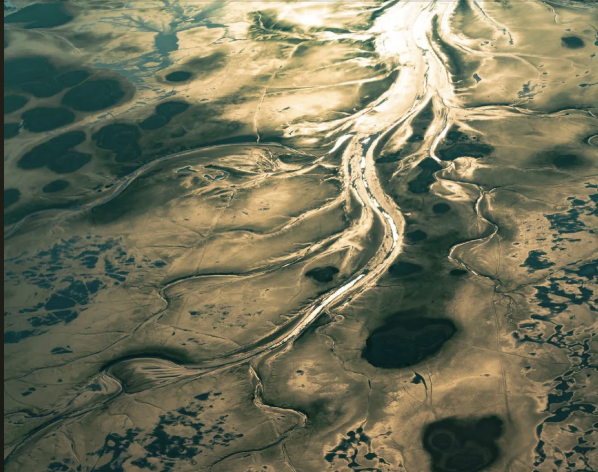
The perennial canals of the Bar uplands of central Punjab—Lahore, Faisalabad, Sargodha, Gujranwala—stand today as the greatest impediment to restoring harmony between river and field in the Indus basin. They represent an artificial system, forced upon a landscape that had never known such waters, and they have become the chief barrier to transforming our irrigation to follow the wisdom of natural basin drainage. If we wish to let the rivers flow freely and at the same time utilise their floods for the lands that lie closest to their belts, the lands that are most fit for irrigation, we must reconsider the very premise of delivering perennial water to the elevated bars. Without such transformation, we cannot hope to escape the cycle of disastrous floods. The world is learning that to live with rivers one must release them: in the Netherlands the “Room for the River” programme has opened embanked lands to floodwaters, while in the Mississippi valley in the United States floodplain restoration has been promoted as a cure both for inundation and for ecological impoverishment.
Geography itself testifies why the bars were never meant for flood irrigation. The interfluvial uplands of central Punjab stand as much as fifty feet above the active flood plains, while the lower Indus slopes so gently that its fall is only one foot in three miles. In Multan, Bahawalpur, Muzaffargarh, Sukkur and Hyderabad, the gradient allowed floods to spread naturally and fertilise the land. In Lahore or Gujranwala, by contrast, the waters could never climb the bar. That is why the inundation canal revolution that flourished under the Kalhoras in Sindh, the Abbasis in Bahawalpur, and Diwan Sawan Mal in Multan from the late eighteenth to mid-nineteenth century did not extend into the central Punjab uplands. It was only by building weirs, levees and embankments that the British colonial officials could head up the rivers and drive perennial canals into the bars. Their purpose was not ecological balance but the production of commercial crops for the Empire’s industries. Cotton, indigo and wheat had to flow as raw material to Manchester, and so the rivers themselves were bent to the needs of an industrial order. The Lower Chenab Canal Colony, begun in 1892, which irrigated nearly three million acres, is the classic emblem of this engineering of nature in the service of commerce.
The contrast between precolonial abundance in the floodplains and the barrenness of the bars is striking. In Multan, the Lower Sutlej Inundation Canals already stretched to 394 miles of main canals and 328 miles of distributaries. In Muzaffargarh, the Chenab inundation canals measured 232 miles. In Bahawalpur State, before the Sutlej Valley Project, inundation canals extended some 810 miles. In Sindh the figures rise higher: Hyderabad district alone counted ninety-five canals totalling nearly 1,100 miles; the Wahur Wah system measured 566 miles; the Nawabshah channels another 400 miles. By contrast, the uplands of Gujranwala or Faisalabad were noted by the early colonial officials as waste or mere grazing grounds, with a scattering of wells but no significant inundation canals. The bars were not part of the inundation world. They were annexed into it by imperial will, against the grain of the land.
Archival records reveal that both Bahawalpur State and Sindh long resisted the spread of artificial perennial canals, for their prosperity already rested on the extensive inundation networks that channelled the Indus floods in tune with the seasons. Yet this reluctance could not withstand the massive upstream diversions in the uplands of central Punjab, which starved their flood-fed systems and forced them into an irrigation regime they had never sought.
The means of this annexation were the weirs, embankments and levees that drastically altered the natural drainage of the basin. The historically constructed inundation canals had once been compatible with the natural regime, diverting flood flows into seasonal channels, filling ponds and lakes along the rivers, and sustaining forests that stood as natural levees against devastating floods. But once the waters were forced upstream into the bars, the system broke down. River training works narrowed the beds, destroyed the riverine forests, and obstructed the creation of natural ponds. In the post-colonial period, the building of great dams exacerbated these changes, distorting the seasonal rhythm of the Indus. And when the Indus Waters Treaty assigned the Sutlej, Beas and Ravi entirely to India, their channels were left so degraded that any medium flood now carries the fury of a super flood.
Thus, the perennial irrigation of the central Punjab uplands began the long process of fragmentation of the basin. It was the first act in which the unity of river and floodplain was broken. The post-colonial dams and the partition of the rivers only carried forward the same logic, until today the Indus basin lies like a broken mirror, each shard reflecting floods in unpredictable violence.
The lesson of recent catastrophes is clear: the mounting flood damages demand a new thinking. We must limit the perennial canals in the central Punjab uplands, for they never belonged there. We must restore the inundation canals of Multan, Bahawalpur, Dera Ghazi Khan, Muzaffargarh and Sindh, which once worked in tune with the floods. We must relax the embankments, allow the rivers to form new ponds and lakes, and regrow the riverine forests. Alongside, we can revive indigenous systems—spate irrigation in the Trans Indus belt and Balochistan, kareez in Balochistan, the intelligent use of riverine aquifers, and the rich underground water tables of central Punjab that have accumulated due to canal seepage—while adopting small and smart technologies that conserve water. But all this requires that the central Punjab must surrender a significant part of its canal command so that the rivers can breathe and live.