

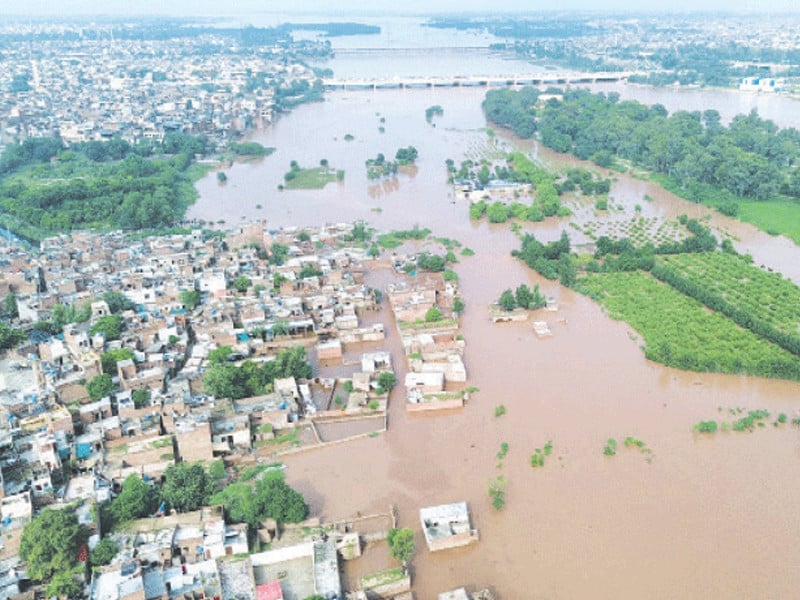
How does a city drown? Sometimes it is not the fury of nature alone, but the failure of men and their institutions that submerge a place into silence. Jalalpur Pirwala, nestled in the fertile lands of South Punjab, is one such tragedy unfolding in real time. Situated between the mighty Chenab and Sutlej rivers, this town has become a watery graveyard during the ongoing floods—a disaster written in its geography, yet worsened by negligence and shortsighted planning.
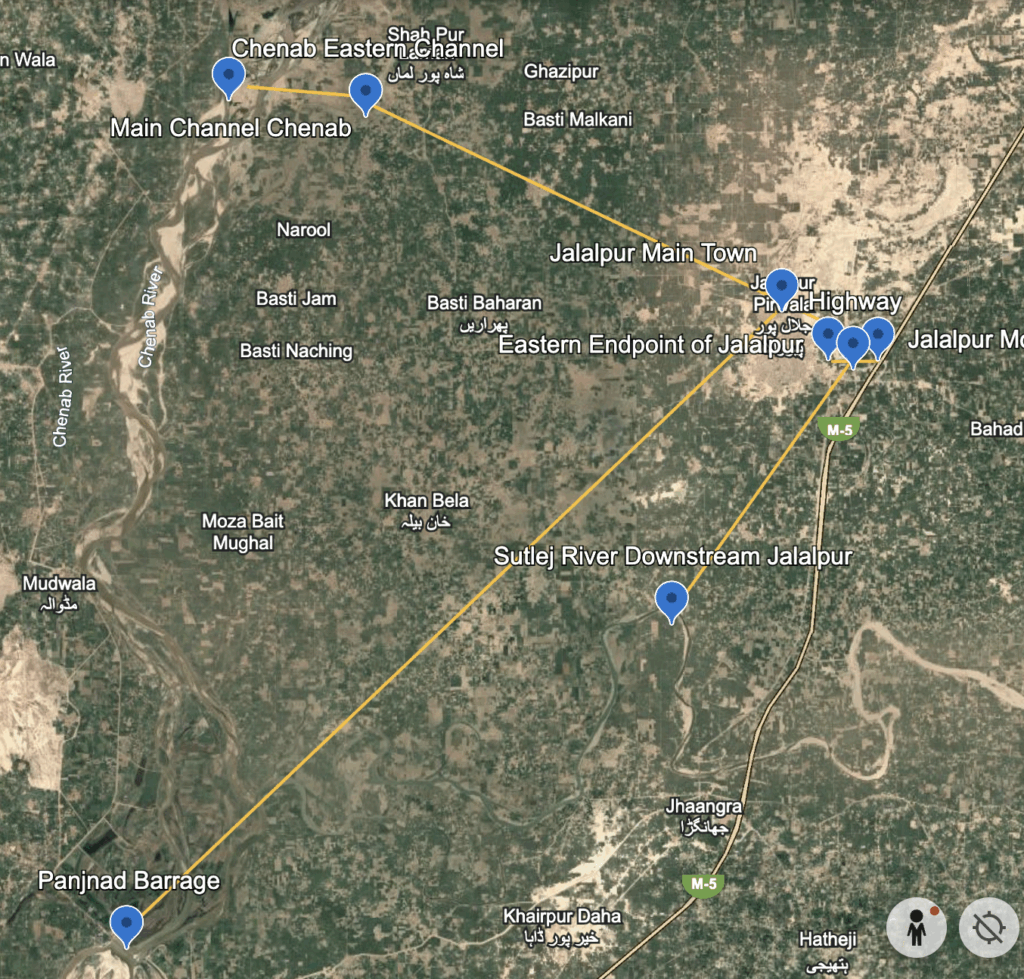
Seventeen kilometers to the west flows the twisting, unpredictable Chenab, while only nine kilometers to the south rolls the Sutlej. To the east, a mere 1.5 kilometers away, looms the M-5 Motorway, a modern wall of concrete built to connect Multan with Sukkur. Between these forces lies Jalalpur, once vibrant, now suffocated by water from all directions. Downstream, just 27 kilometers away, stands the Panjnad Barrage, where rivers converge in an engineered chokehold.
The tragedy of Jalalpur is not just its vulnerable location, but the fragmented way its drainage system has been destroyed over decades. The Panjnad Barrage has raised upstream riverbeds with ninety years of silt, leaving the land unnaturally elevated. Local embankments—constructed haphazardly by landlords and government alike—have further disrupted natural flows. The result? Instead of offering pathways for water to escape, Jalalpur has become a basin where every drop lingers, turning streets, homes, and fields into a permanent swamp.
And yet, when the M-5 Motorway was carved across this landscape, did anyone in power pause to ask: What will happen to the drainage? Did any government in Lahore or Islamabad study the impact of Panjnad’s altered hydraulics? Was there a plan for the day Chenab and Sutlej might rise together, carrying with them not just water but despair? The silence to these questions is deafening.
Today, as families abandon submerged homes, as cattle drown in their stalls, and as fertile fields rot under stagnant floods, the neglect becomes visible. Jalalpur has been turned into a prison of water, not by the will of God alone, but by decades of indifference. South Punjab, the Siraiki belt, has always been treated as a backwater by rulers who see Lahore as the only Punjab that matters. The people of Jalalpur cry not only for relief from floods, but for recognition—that their lives, lands, and futures are as valuable as any city on the Grand Trunk Road.
The map tells a story in stark lines. To the north, Chenab presses down; to the south, Sutlej claws upward; to the east, the motorway blocks escape; and to the west, Panjnad traps the flow. Jalalpur is hemmed in on every side. What is needed is not more concrete or careless embankments, but the wisdom our forefathers once lived by: creating room for rivers to spread, restoring natural drainage channels, and shaping human settlement in harmony with geography and landscape rather than against it. Only by respecting the land and its rivers can future disasters be prevented.
Jalalpur Pirwala’s drowning is not just a natural disaster—it is a man-made injustice. The waters will eventually recede, but the memory of betrayal will linger. True protection for this land will only come with self-rule and autonomy for the Siraiki region, where local voices and knowledge can guide decisions rooted in the soil, the rivers, and the lived wisdom of the people. Without this, Jalalpur’s tragedy will not be the last.