

جیویں نکھڑݨ ویلھے ہَم سانول
ہک وار میکوں اُنویں وَل کر ݙے
عزیز شاہد
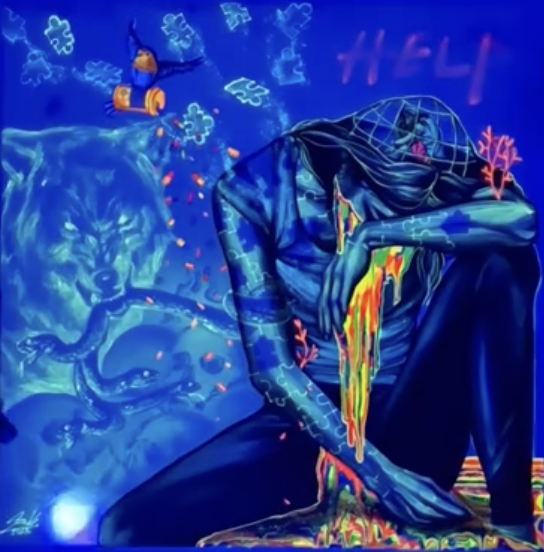
Why does the poet ask to return to the state of parting—a moment marked by torment, anguish, and vulnerability? Why does he not ask for reunion, consolation, or healing? At first sight, this desire seems self-punishing. Yet the poet is not asking for the beloved to come back. He is asking to be returned to a state of being—the self he was when love was at its most intense and exposed.
The moment of parting is painful, but it is also the moment when desire becomes fully visible. Love, at that threshold, is stripped of comfort and certainty. What remains is intensity, clarity, and a heightened sense of self. The poet senses that something essential about love appears precisely at the moment it is about to be lost. That is why he wants to return there, even if only once.
This state of parting can be understood as a symptom, in the psychoanalytic sense. A symptom is not merely a wound or a malfunction that needs to be cured. It is a meaningful formation where desire takes shape. It holds together what we want and what we cannot fully have. The symptom hurts, but it also gives structure and meaning to desire. Without it, desire risks collapsing into dull satisfaction or emptiness.
In Lacanian terms, desire does not aim at simple fulfilment. It survives through lack, delay, and tension. The state of parting becomes a symptom because it preserves this tension. The pain is real, but so is its function. The poet’s longing is not for suffering itself, but for the intensity through which love once spoke most clearly.
This also explains why people often return to their symptoms. There is an element of enjoyment, or jouissance, involved. This enjoyment is not pleasure in the ordinary sense. It is a troubling satisfaction that comes from repeating what wounds us. In love, this is easy to recognise. People return to unavailable lovers, old heartbreaks, or relationships that once failed them. They claim to want peace, yet what they seek again and again is intensity.
Someone may say they want to move on, but still revisit the memory of a painful goodbye. Another may cling to longing itself, because longing keeps desire alive. The symptom gives desire a familiar shape. Losing it can feel like losing oneself.
This is why Slavoj Žižek provocatively says, “Enjoy your symptom.” He is not offering comfort or encouragement. He is pointing to an uncomfortable truth: that our suffering is often the very place where desire, identity, and meaning hold together. The poet’s plea—“make me just that way again, just once”—recognises that love, without its symptom, may lose its depth.