

The floods of 2025 have once again revealed the tragic truth of the Siraiki Wasaib — that its people live in invisibility. Their lives and deaths remain largely unrecognizable and hence ungrievable within Pakistan’s political community. The catastrophe that has swept through Jhang, Multan, Muzaffargarh, and Bahawalpur is not merely an environmental disaster; it is a political and ethical failure — the failure to see the Siraiki people as lives that matter, as human beings whose loss deserves collective mourning.
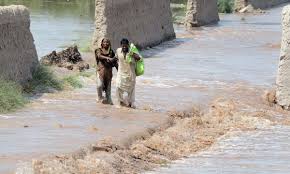
Hundreds of Siraiki people have drowned. Millions are displaced by the deluge. Their homes, crops, and livestock lie ruined beneath contaminated water. Entire communities now survive on embankments and in makeshift tents. Nothing remains to rebuild life except the will to endure. Yet, despite this catastrophe, there is a chilling silence across the political community. The tragedy of the Siraiki people has failed to pierce its conscience.
The absence of public grief is not accidental; it exposes a deeper truth about recognizability and abandonment. In Judith Butler’s terms, only those lives that are recognizable within a moral and political frame become grievable. Others — the unrecognizable — suffer and perish without being seen as fully human. The Siraikis, historically positioned between Punjab’s power and Sindh’s resistance, inhabit precisely such a zone of unrecognizability. Their suffering disappears amid the confrontational politics of water, provinces, and nationalism. As Punjab and Sindh trade accusations over flood management and river rights, the drowned bodies of the Siraiki poor sink below the surface of debate. Their grief is neither owned by Lahore nor echoed by Karachi. They are the uncounted casualties of both water and words.
Consider the tone of recent political exchanges. When Maryam Nawaz, championing Punjabi interests, raises slogans of provincial defiance against Sindh, she inadvertently performs the erasure of the Siraiki world. In this new confrontation, there is only Punjab and Sindh — no space for Siraiki people who live in between, whose villages form the delta of abandonment. Their unrecognizability is not the product of ignorance or oversight; it is the very way power works in Pakistan. Power recognises only those who fit its frames — its languages, its electorates, its capital cities. Those who do not, like the Siraikis, remain visible only as statistics in disaster reports, not as lives capable of being mourned.
The 2025 floods thus reveal the political economy of abandonment. Recognition, as Butler reminds us, is not a moral gift; it is an operation of power. To be recognised as human is to be seen through the normative lenses of the political community and media — as people worth saving, grieving, or rebuilding for. The Siraikis have long lived outside these lenses. Their history of linguistic marginality, their lack of provincial status, and the capture of their resources by central and provincial elites have made them a population of bare survival. They are governed but not represented; administered but not heard. Even their tragedy becomes a spectacle managed from above rather than a cry that transforms policy or conscience.
The same structure of unrecognizability and ungrievability marks the fate of poor Siraiki labourers killed in Balochistan and elsewhere. In a cruel irony, Baloch militants often misrecognize them as Punjabis — killing them under the illusion of striking at Punjabi dominance — while Punjabi nationalists erase their Siraiki identity altogether by subsuming them into the same dominant category. Between these two frames of distortion, the Siraikis live and die in a zone of misrecognition. Their blood becomes doubly invisible: shed through a mistaken identity and forgotten through deliberate erasure. Their deaths, like their floods, dry unnoticed. This double abandonment — at once ethnic and economic — defines the invisibility of Siraiki existence today.
In the present structure of Pakistan’s recognition, Siraiki life occupies the lowest rung of visibility. The political community looks through them, not at them. This structural invisibility is what Butler calls derecognition — a condition in which lives are lived and lost without ever entering the sphere of the human. To be unrecognisable is to be abandoned before disaster strikes, and to remain ungrieved after it ends. The floods did not make the Siraikis vulnerable; they merely exposed a vulnerability already woven into the fabric of power.
Yet within this forsakenness lies an extraordinary irony. The Siraiki people are among the most cultured inheritors of the Indus Valley’s ethos. Their poetry — from Khwaja Farid to Ashu Lal— is steeped in the grammar of mourning. Their language itself is a vocabulary of grief, tenderness, and remembrance. They know, perhaps more than any people of the subcontinent, that the act of grieving is what makes us human. But today, they have been pushed to such extremities of bare survival that they cannot even grieve their losses. When one lives at the level of mere endurance, mourning becomes a luxury. Their own capacity for compassion has been silenced by the struggle to breathe.
This is the most brutal face of unrecognizability: when a people’s pain becomes inaudible, when even their sorrow is taken away. To live without the right to grieve is to live outside humanity’s circle. The Siraikis, therefore, are not merely victims of flood or neglect; they are a forsaken community, abandoned by the political imagination. Their condition calls for a reckoning that goes beyond relief camps and compensation cheques. It demands a transformation of how the political community frames its people — who is seen, who is heard, and who is mourned.
From the mud and silt of the 2025 floods, the Siraiki Wasaib will have to rise again. No state, no party, will bestow recognizability upon them; they must seize it. Their survival will depend not only on rebuilding homes but on the imperative of due recognition and rights, insisting that their lives, languages, and losses count as part of the human story. The Siraikis must become the authors of their own frame, the mourners of their own world. Only then can the forsaken rise from abandonment into a community of the living.