

Introduction
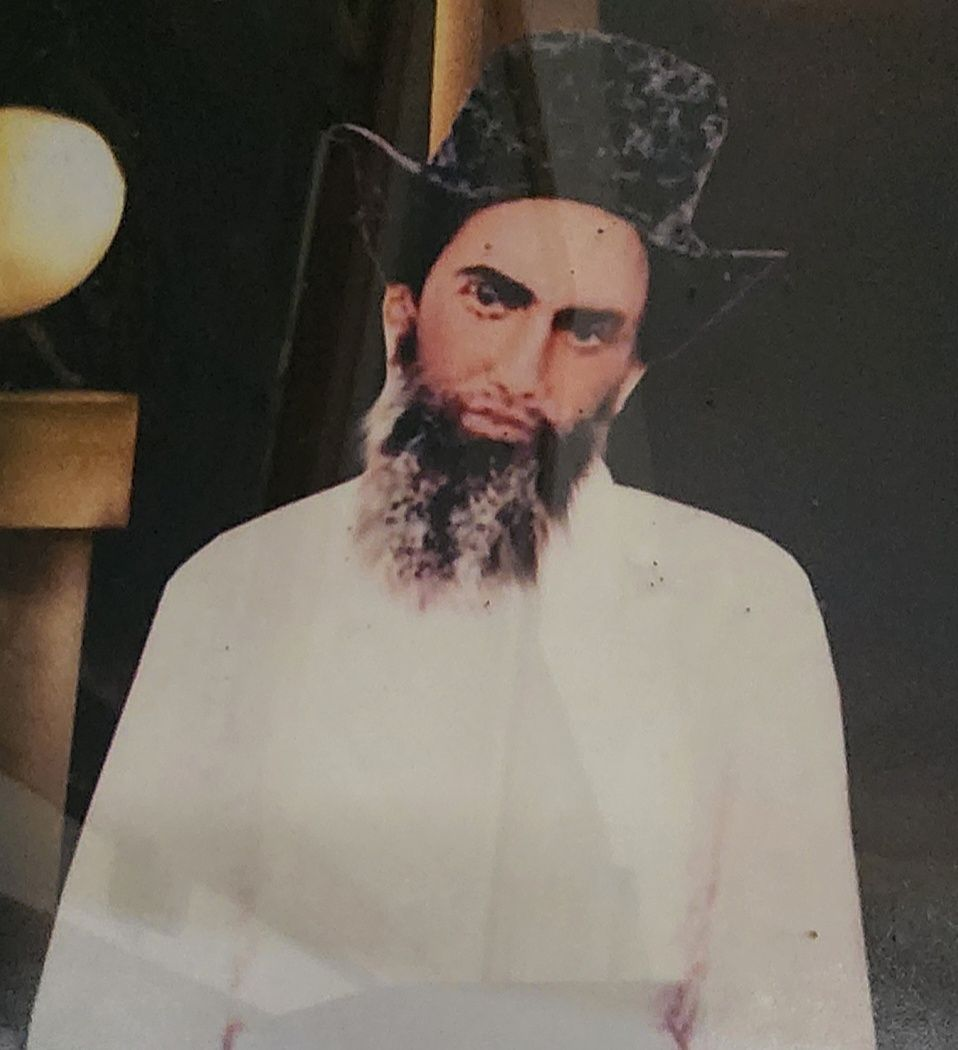
Khawaja Ghulam Farid occupies a rare and multi-faceted place in South Asian intellectual history. A mystic and chief saint of the late Chishti order in the middle Indus Valley, he was also a revered poet of the Siraiki language in his lifetime and is now considered a symbol of Siraiki identity and cultural pride. Yet a lesser acknowledged dimension of his legacy lies in his scholarship. Farid was deeply rooted in Siraiki, Sindhi, and Hindi, while also receiving early instruction in Persian and Arabic to acquaint him with classical Sufi literature. Later, he acquired proficiency in Sanskrit and English[1].
This mastery of multiple languages positioned him uniquely to interpret and synthesise the diverse strands of Indic-Islamic intellectual traditions. His poetry carries the unmistakable imprint of this polyglot erudition: an expansive vision that weaves together metaphysics, aesthetics, and cultural critique. Farid can rightly be called a gnostic poet, one whose verse does not merely ornament but illuminates.
Farid was born in 1845, at a moment when the middle Indus Valley (Siraiki Wasaib) was entering the fold of British colonial modernity. Just after his birth, the East India Company conquered Multan after a bloody siege in 1848–49. Although the princely state of Bahawalpur retained partial autonomy, it too was drawn into the orbit of indirect British rule.
By the time Farid came of age, colonial modernity had reached maturity, producing deep ruptures in the political, cultural, and linguistic fabric of the Indus Valley. Two colonial interventions were especially consequential. First, the imposition of Urdu as the language of courts, education, and official communication. Alongside the printing press, Urdu’s official status marginalised vernaculars like Siraiki and Punjabi, severing communities from their linguistic heritage and reshaping aesthetic sensibilities to align with imperial norms[2].
Second, the colonial state’s tendency to essentialise religious identities—shaping them into rival, mutually exclusive categories—fuelled communal strife. Orientalist scholarship, evangelical missionary work, and Victorian moral frameworks all contributed to a reformist zeal that redefined Hindu and Muslim traditions in rigid, oppositional terms. Institutions like the Deoband Madrassah and the Arya Samaj embodied this impulse[3]. The Urdu–Hindi controversy, itself a product of colonial language policy, deepened the divide, with print media amplifying sectarian voices.
Farid, fully aware of these linguistic, cultural and social ruptures, responded in verse with both clarity and subtlety. In one pointed couplet, he urges:
آپݨی نگری آپ وَسا توں
پَٹ انگریزی تھاݨے
“Make your motherland blossom and thrive,
cast down the British seat of might.”
His choice to compose in the classical Siraiki kafi form was itself a political act—an act of resistance against the linguistic displacement of his people. He shaped a standardised Siraiki through his poetry, laying the foundation for its role as a marker of identity in the post-colonial period. Rejecting modern poetic fashions encouraged by colonial tastes, he warned:
وَل واتوں سمجھ فرید اَلا
کر محض نہ شعر جدید وَلا
ہے چالوں حال پدید بھلا
توڑے کیجو سارے ابتر ہوں
“Farid, speak again with knowing tongue,
not merely weave again the modern verses.
Today’s moves seem fair to the eye,
yet in truth we’re broken, and scattered awry.”
Farid’s defiance was not simply political or aesthetic—it was metaphysical. Drawing on Wahdat-ul-Wajud (Unity of Being) from the Islamic tradition and on Vedanta and Bhakti from Indian sources, he resisted any binary framing of religious identity. His poetics of unity challenged the colonial logic of division, seeking instead to deepen acceptance of difference as part of a greater oneness.
Recognition: Traditions of Knowledge and the Experience of Loss
A recurring thread in Farid’s poetry is his use of terms such as سمجھ (samajh), سنڄاݨ (sun’jaan), and ڄانان (jaan’nan), each layered with the meaning of “recognition.” This recognition has two principal sources.
The first lies in the knowledge traditions of Ibn Arabi’s Wahdat-ul-Wajud and in Indian Vedanta and Bhakti. Farid affirms the legitimacy of diverse religious forms without conceding to essentialist boundaries: the Essential Being (وجوب ذات) is one, while multiplicity is its manifestation. He echoes Ibn Arabi’s dialectic: “Affirm diversity in immutability (thubūt) but keep it away from existence (wujūd). Affirm unity in existence (alwaḥda fī alwujūd), but keep it away from immutability.”
In verse, he urges:
دلڑی سُگھڑ سُنڄاݨ سیاݨی
آکھے ہر دم سمجھ ٻِلیاݨی
مظہر ذات حمد دا جاݨی
توݨے روپ صنم دا ہے
“The heart is skilled, aware, and wise,
it calls each moment: ‘Open your eyes!’
Know the Essence, the praise sublime,
though it wears the idol’s form in time.”
Similarly:
سَمجھ سُنڄاݨی غیر نہ ڄاݨی
سَبھ صورت ہے عین ظہور
“Understand and know: do not consider anything as ‘other’;
every form is the very manifestation (of the Divine).”
His engagement with the nirgun–sargun debate mirrors his synthesis of the formless and the manifest, the infinite and the finite:
توں ایہہ سَمجھ سُنڄاݨ نہ چھوڑیں
نرڳݨ سرڳݨ وچ جا جوڑیں
آپݨے آپ توں مونہہ نہ موڑیں
سب ہے روپ سروپ تِہارا
“Do not abandon this understanding and recognition;
make your place in both Nirgun and Sargun.
Do not turn your face away from your own self;
all is your form and your true self.”
This mystical poetics thus became a subtle political critique, undermining colonial-era reformist projects that insisted on rigid boundaries.
The second source of recognition is experiential: the perpetual sense of loss and separation (barhoon, vichhora). For Farid, absence is a path to presence; pain is a purifier of duality:
وِصل فرید کوں حاصل ہویا
جب ہو گیا نابود
“Farid found the union he sought,
when self was gone, and nothing remained.”
And:
درد فرید ہمیش ہووے
سارے پاپ دوئی دے دھووے
“May pain always be with Farid,
(it) washes away all sins of duality.”
Grief, for Farid, extended beyond metaphysics into language, land, ecology, and community — a wound and a teacher, compelling the regeneration of bonds severed by colonial modernity.
Ethics of Translation: Khawaja Farid as a Virtuous Interpreter
Farid’s metaphysics of unity and diversity was also an intentional strategy of resistance to the colonial project of recasting Hindus and Muslims as incommensurable communities. Pre-colonial South Asia, while marked by differences, offered sustained traditions of dialogue in which mystics, scholars, and poets created conceptual bridges across religious boundaries.
Colonial modernity, by contrast, cultivated rigid binaries. As Gyanendra Pandey notes, “In the colonialist view the phenomenon of communalism in India is age-old; it flows from the essential character of the peoples of India; and it affects more or less the whole population, with only a few enlightened, liberal, western-educated men and women being truly free from the conmunal spirit.[4]” Similalry, Harjot Oberoi argues that communalism in colonial India was not a timeless reality but a modern construct shaped by colonial classification and reformist zeal. In his account, pre-colonial Punjab was marked by porous religious boundaries where Sikhs, Hindus, and Muslims often shared devotional spaces, such as the popular cult of Sakhi Sarwar. Under colonial modernity, however, practices like Sarwar worship came to be condemned by Sikh reformists of the Singh Sabha, who—working within the classificatory logic of the census, education, and print—sought to reconstruct Sikh identity as a bounded, exclusive community. The rejection of shared saints and plural ritual life exemplified how older cultural continuities were dismantled and reinterpreted through a binary, communal framework[5].
Colonial policy made religious difference the master sign of social identity, replacing older, more fluid affiliations. It fixed the identity of communities within rigid boundaries of religion, making them mutually exclusive and collectively exhaustive. These policies and discourses — amplified by events such as the first major communal riots in Multan in the 1880s over cow slaughter — entrenched communal antagonism[6].
It is in this context that Alasdair MacIntyre’s account of discursive traditions becomes illuminating. A tradition, he writes, is “an argument extended through time…in which disputes occur about what these agreements mean.” Such traditions are often incommensurable, yet “rare figures” — virtuous interpreters — can partially bridge them through justice, truthfulness, and the ability to imaginatively inhabit rival standpoints. Ibn Rushd in medieval Spain, Bhagat Kabir in vernacular North India, and Dara Shikoh in Mughal Delhi all exemplify this role[7].
Farid stands in this lineage. Drawing on the Chishti Sufi lineage, Ibn Arabi’s metaphysics, Advaita Vedanta, Bhakti devotion, and the oral-poetic culture of the Indus Valley, he practised what Tony K. Stewart terms “conceptual equivalence” — reframing one tradition’s categories in the thought-world of another without erasing their distinctiveness[8].
In his Maqabis-ul-Majalis, Farid glossed “Yoga” as suluk (Sufi path) and “Vasistha” as murshid (spiritual guide), interpreting Hindu Shastras as proponents of Wahdat-ul-Wujud.
“ Hazrat Aqdas was reading Minhaj al-‘Arifeen, a book by Dara Shikoh, which is a translation of the Hindu scripture Yoga Vasistha. I (the writer) asked what Yoga Vasistha means. He replied that Yoga refers to the spiritual path (suluk), and Vasistha is the name of a person who was the spiritual guide (murshid) of Ram Chandra….He then said that the Shastras are adherents of the doctrine of Wahdat al-Wujud (the Unity of Existence), and that true salvation (nijat-e-haqiqi) is that state after which there is no return to hardship, wealth, or torment. By this, they mean fana (annihilation of the self), tams-e-haqiqi (complete self-effacement), and being absorbed in the Divine Essence — a stage where the ego is entirely obliterated and one becomes colorless, nameless, and lost in the colorlessness of Divine Oneness (ahadiyyah)[9].”
He called Hinduism “the religion of Adam,” framing it as the primordial matrix of later revelations. In discussion with Brahmins from Mathura, he explained idol worship as symbolic mediation akin to Sufi visualisation of a master, and interpreted Vishnu, Brahma, and Mahesh as intermediaries analogous to angels and prophets.
“One person raised an objection, saying that idol worship has emerged among them. Hazrat Aqdas replied: “Although they do practice idol worship, they do not consider the idol to be God and are believers in the concept of the Unity of Existence (Wahdat al-Wujood)….After that, someone submitted that idol worship was not present in the beginning but entered their religion later. Hazrat Aqdas replied, “No, no. In the beginning, the connection between God and creation was through angels — meaning that divine grace was received from God through angels, like Vishnu, Brahma, Mahesh, etc. Later, this connection began to occur through human beings — in Islam, through prophets and saints, and in Hinduism, through avatars[10].”
His engagement with the Chhaju religion revealed similar generosity: drawing parallels between aarti and Islamic prayer, wuzu and ishnan, and declaring its followers strict monotheists. His poetry extended these strategies: juxtaposing Wahdat-ul-Wujud with Advaita Vedanta, fusing Perso–Arabic and Sanskrit vocabularies, and locating Hindu and Muslim sacred geographies within the same metaphysical frame:
قبلہ کعبہ، مسجد، مندر
دیر گنیش سب تجھ میں ہے
“Qibla, Kaaba, mosque, temple,
the monastery, Ganesha — all are within you.”
The following verses are more pronounced in pointing out the deeper similarity between Hindu and Islamic mystical traditions.
چاروں بَید بِدانت پکارن
اوم برم نارائن دہارن
آتم اوتم سروپ سِدھارن
دویت فرید ہے جوٹھا لارا
“The Vedas four and Vedanta proclaim,
in Om, Brahm, Narayan they dwell.
In Ātm and Ōtm their forms are shown,
Farid declares: duality is false alone.”
By returning to classical metaphysical frameworks and dialogic mystical traditions, Farid resisted colonial binary logic. His conceptual equivalences were not syncretism for its own sake, but a principled metaphysics capable of holding plurality without dissolving into relativism.
Conclusion: Mystical Poetics as Political Ethics
Read together, Farid’s recognition (samajh–sun’jaan), metaphysical vision, and ethics of translation illuminate a coherent intellectual project. His work sought to reclaim a space for multiplicity within unity, against the colonial epistemology of rigid oppositions. His verse was both an act of cultural preservation — standardising and dignifying Siraiki in the face of linguistic marginalisation — and a metaphysical intervention, reasserting that truth is not diminished by difference.
In MacIntyre’s sense, Farid was a virtuous interpreter: grounded in multiple traditions, committed to justice and truthfulness in representation, and skilled in rendering the unfamiliar intelligible without erasure. His example demonstrates that the metaphysical and the political can be mutually sustaining — that a poetics of unity can be a politics of coexistence.
[1] There are numerous references to his knowledge of multiple languages in Maqābis al-Majālis—a collection of his discourses in the traditional Malfūẓāt genre. For example, Maqābis (p. 58) records: “At that time, he was personally writing and teaching the grammar of the Shāstric language, Gurmukhi, and English to his close attendants, because he possessed divinely granted knowledge (ʿilm ladunnī) and was a fountainhead of all sciences, arts, truths, and spiritual insights.”
[2] Tahir Kamran argues that Lahore emerged as the new center of Urdu literary activity in the late nineteenth century, largely due to the migration of Urdu literati from Delhi after 1857. The formation of the Anjuman-e-Punjab provided a crucial institutional setting where colonial officials and local scholars collaborated to reshape literary taste. Its sittings and sponsored mushāʿiras introduced new poetic forms and themes, privileging didactic, descriptive, and “natural” expression over the traditional ghazal. Muhammad Husain Azad’s celebrated 1874 address at the Anjuman explicitly critiqued classical poetics “in the light of the principles of English poetry,” thereby anchoring this transformation. See Tahir Kamran, “Urdu Migrant Literati and Lahore’s Culture,” Journal of Punjab Studies 19, no. 2 (2012): 169–189.
[3] The emergence of nineteenth-century reformist movements in South Asia, such as the Ārya Samāj (founded in 1875 by Swami Dayananda Saraswati) and the Dār al-ʿUlūm Deoband (established in 1867), was deeply shaped by the encounter with colonial modernity. Both movements sought to return to an “authentic” scriptural core—Vedic in the case of the Arya Samaj and Qurʾānic-Hadith in the case of Deoband—yet their methods reflected the rationalist and disciplinarian ethos introduced under British colonial rule. The Arya Samaj promoted scriptural exegesis and social reform through print, public debate, and an emphasis on “rational” readings of the Vedas, while the Deoband seminary institutionalized a standardized curriculum (Dars-i Niẓāmī) with bureaucratic structures and print culture, marking a departure from earlier personalized and fluid modes of transmission. Scholars have argued that both projects, though often framed as anti-colonial or revivalist, internalized aspects of colonial epistemology by privileging textualism, systematization, and moral discipline as markers of authenticity and authority (Metcalf 1982, pp. 44–78; Jones 1976, pp. 50–89).
[4] Pandey, Gyanendra. The Construction of Communalism in Colonial North India. 2nd ed., Oxford University Press, 2006. p. 11
[5] Oberoi, Harjot. “The Worship of Pir Sakhi Sarvar: Illness, Healing and Popular Culture in the Punjab.” Studies in History, vol. 3, no. 1, 1987, pp. 29–55.
[6] The Multan riot of September 1881 began amid disputes over the rebuilding of the Prahladpuri temple spire but escalated into large-scale Hindu–Muslim violence when the sale and transport of cow meat provoked clashes. Over two days, shrines and markets were attacked, including the burning of the Prahladpuri temple. Though no deaths were reported, property damage was extensive. The British administration both suppressed the riot with troops and shaped its aftermath by imposing compromises that reinforced communal boundaries, thereby instrumentalizing the conflict to maintain control (Ross 1883, 81–82; Malik 1982, 153–60; Malik 1984, 36–38).
[7] In Alasdair MacIntyre’s account of traditions, genuine rational engagement across rival frameworks requires a “virtuous interpreter”—one who develops sufficient literacy in another tradition to understand it on its own terms, imaginatively reconstruct its strongest arguments, and then return to test the coherence of one’s own standpoint. Such interpreters embody virtues of intellectual honesty, humility, and practical wisdom, enabling conversations that avoid mere relativism or dogmatism (MacIntyre 1988, 164–69; MacIntyre 1990, 116–18).
[8] Tony K. Stewart shows that in early modern Bengal, Hindu and Muslim authors engaged in what he calls “conceptual translation,” rearticulating key religious and cosmological ideas into terms recognizable within the other’s framework. Rather than direct lexical translation, this process relied on conceptual equivalence—finding functional counterparts across traditions—so that Muslim narratives could be rendered intelligible through Hindu metaphors and vice versa. Stewart argues that such translation practices produced a shared discursive space in which boundaries remained porous and devotional idioms overlapped (Stewart 2001, 264–68; Stewart 2009, 36–42).
[9] Khawaja Ghulam Farid, Ishārāt-e-Farīdī [Maqābīs al-Majālis], compiled by Maulānā Ruknuddīn, Lahore: Al-Faisal Nashiran-o-Tajiran Kutub, 1942.
[10] Ibid