

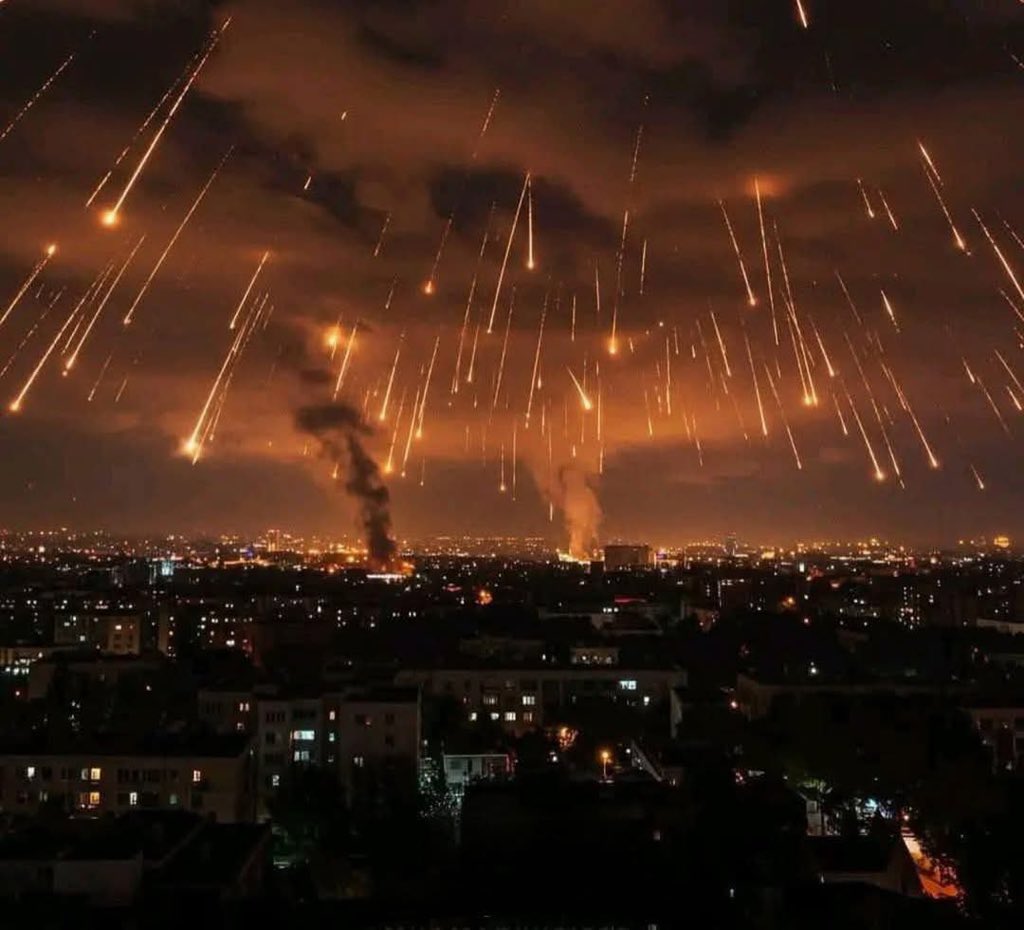
Modern War, as a breakdown of reason is the misleading claim of modernity. But that story flatters the modern nation-state and hides the political economy that keeps war available. The modern state is, in a strict sense, an institution organised around the justified use of violence. The state is not a moral community that sometimes turns violent; it is an institution that secures order by reserving the right to coerce, to classify, to police, to punish, and when it chooses to kill. We often speak as if science were innocent and only its “misuse” were guilty. Yet there may be features in modern scientific practice that make it unusually available to the powerful: its preference for abstraction over lived experience, its impatience with moral ambiguity, and its habit of converting questions of ends into questions of technique. When knowledge is organised primarily as control, it will predictably serve those who already command the means of control. Modern reductionist science has therefore not stood outside state violence as a neutral lamp of progress; it has not merely accompanied this arrangement; it has supplied its methods and instruments – measurement, surveillance, prediction, and the technical imagination of “solutions.” where the world is rendered into targets, variables, and “problems” to be manged.
In periods of capitalist stress – when legitimacy thins, inequality hardens, and surplus looks for outlets – war and militarisation acquire an additional function: they stabilise Military industrial complex through public spending, open or police corridors of trade and energy, and convert the management of spatial into a technique of “risk control.” Imperialism, in this sense, is less a mood than a method: keeping certain spatiality governable, and certain sovereignties conditional, through a mix of force and Capital.
Liberalism carries a defect at the root: it cannot speak of a shared common good without treating it as coercion, so it empties politics of moral purpose and replaces it with procedure. In that vacuum, moral claims become incommensurable – rights, freedom, security – none able to genuinely adjudicate the other, leaving “settlement” to the strongest institution. The modern state then presents itself as a neutral manager, but it is a manager with a monopoly of force: it turns ethical conflict into administration, and administration into necessity. This is how violence acquires a clean vocabulary and the war machine can operate while still sounding principled.
Vandana Shiva’s critique sharpens the point with an epistemology of violence: reductionist science, she argues, is not merely a method but a political style – one that fragments complex living systems into controllable parts, then treats the resulting control as progress. In war, this reductionism becomes literal: a society becomes a set of nodes; a state becomes an “array”; human lives become “collateral” to a target list. Even the vocabulary – C2, suppression of air defences, cyber disruption – announces a world understood as machinery. She has written in a deliberately unsettling register that “80 percent” of Modern scientific endeavour is tied to war-making, a provocation intended to expose the civilisational orientation of modern science.
There is no universally accepted data set but even neo-liberal indicators support this structural diagnosis of techno-political ecology:
Just see the so-called developed and Civilised World spending on War-Making.
| Indicator | What it suggests about war-oriented technoscience | Most-cited public figure |
| Global military expenditure | Permanent mobilisation normalised as fiscal common sense | $2.718 trillion (2024) |
| DoD RDT&E request (US) | A single state’s war-tech pipeline at civilisation-scale | ~$145 billion (FY2024 request) |
| DoD share of US federal R&D | War-making as a dominant “socio-economic objective” for public science | ~41% (FY2022) |
| EU defence R&D spending | Militarised R&D growth beyond the US core | €13 billion (2024) |
| Military share of global emissions | War system as a climate actor, not an exception | ~5.5% of global emissions (official mechanism of reporting war emissions doesn’t exist |
| US military emissions since 2001 | The carbon cost of permanent war across decades | ~1.2 billion tCO₂e (2001–2017); ~59 MtCO₂e (2017) |
| Conflict emissions multiplier | Destruction + reconstruction as escalating carbon liabilities | ~175 MtCO₂ (first 24 months Ukraine); ~237 MtCO₂e (later estimates) |
A further enabling condition sits inside this US imperialist machine: fundamentalist Christian/Zionist networks that keep entering the state’s moral script – through appointments, platforms, and the language that senior officials use to explain violence. One can see it in the officialisation of a White House “Faith Office,” in the Rubio’s sermons glorifying the Imperial past and recasting geopolitics as the defence of “Western civilisation” and “Christian heritage, ” and in crusader-coded signals around defence leadership brushed off as harmless style. And it leaks into the chain of command as well: reports describe commanders briefing troops in end-times language, as if Iran is not a political conflict but God’s timetable. This doesn’t replace strategy; it poisons it – by giving force a holy cover, making escalation feel like virtue and expansionism as a duty.
If we then look at Iran, the first thing to resist is the lazy contrast between “modern rational states” and an “irrational theocracy.” Iran is a modern nation-state having Nizam – Shora Nigehban, Majmah tashkhees Maslihat Nizam, Parliament, Majlis Khabargan e Rahbari, Nizam e Adal, Artsh Jamhori Islami, IRSG, Bseej – whose legitimacy is articulated in an Islamic idiom. That combination does not place it outside modernity; it is one of modernity’s characteristic hybrids. And the tension within it is not difficult to state: a polity that claims an ethical foundation will, once it takes the modern state-form, be repeatedly pulled toward raison d’état—toward survival, sovereignty, and enforceability – because these are the goods the state is built to secure first. Under external assault, modern states do what modern states do: centralise, securitise, harden, and turn survival into the highest moral claim as the only guardian. This is why the project of keeping Iran “punishable” is so central: bombs and sanctions are not just about a “file,” they are about preserving asymmetry – ensuring Iran remains administratively and economically disciplinable, never solidifying into an equal that must be negotiated with on reciprocal terms and so that the wider regional order remains aligned with the interests of those who underwrite it. Pressure becomes a technology of governance.
But Iran cannot be understood only through state institutions and strategic doctrines. Its political life is also formed by memory and moral language. One of the most instructive features of the revolution that founded the Islamic Republic was its capacity to translate a religious repertoire into mass politics: the Karbala paradigm – martyrdom, injustice, the righteous minority confronting tyranny – became a shared framework through which ordinary people could interpret authority and resist it. In a world where modern war works by reduction – turning societies into “systems,” cities into “nodes,” lives into “collateral” – Karbala functions almost as an inverse technology: it re-moralises injury, refuses the neutrality of technique, and makes suffering speak in a grammar of justice. This is why pressure does not simply weaken such a formation; it can be metabolised as proof, folded into a long-trained sensibility in which siege confirms truth and endurance becomes legitimacy. At the same time, this is precisely the danger: the modern state can capture this moral archive and convert it into a security doctrine, using martyrdom not to restrain violence but to license it. And beneath this Shi‘i grammar there is also an older civilisational archive – Persianate memories of statehood, conquest, humiliation, restoration – together with complicated, uneven histories with Arab power that can be reactivated under siege as questions of dignity and naming. Under assault, these two currents intensify together – the popular capacity to read coercion as injustice, and the state’s capacity to translate that injustice into securitisation. That is why the present war is not only a clash of capabilities; it is a struggle over interpretation, over naming: who gets to define “justice,” “victimhood,” and “legitimate violence,” who gets to label killing as “preemption” and resistance as “terror,” strangulation as “pressure” and survival as “defiance.” To attack Iran, then, is not only to target infrastructure and procurement; it is to wager that the default technology of modernity – coercion backed by capital and technique – can overpower, or successfully hijack, a moral grammar that has already rehearsed – religiously and civilisationally – suffering as evidence and survival as a claim to truth