

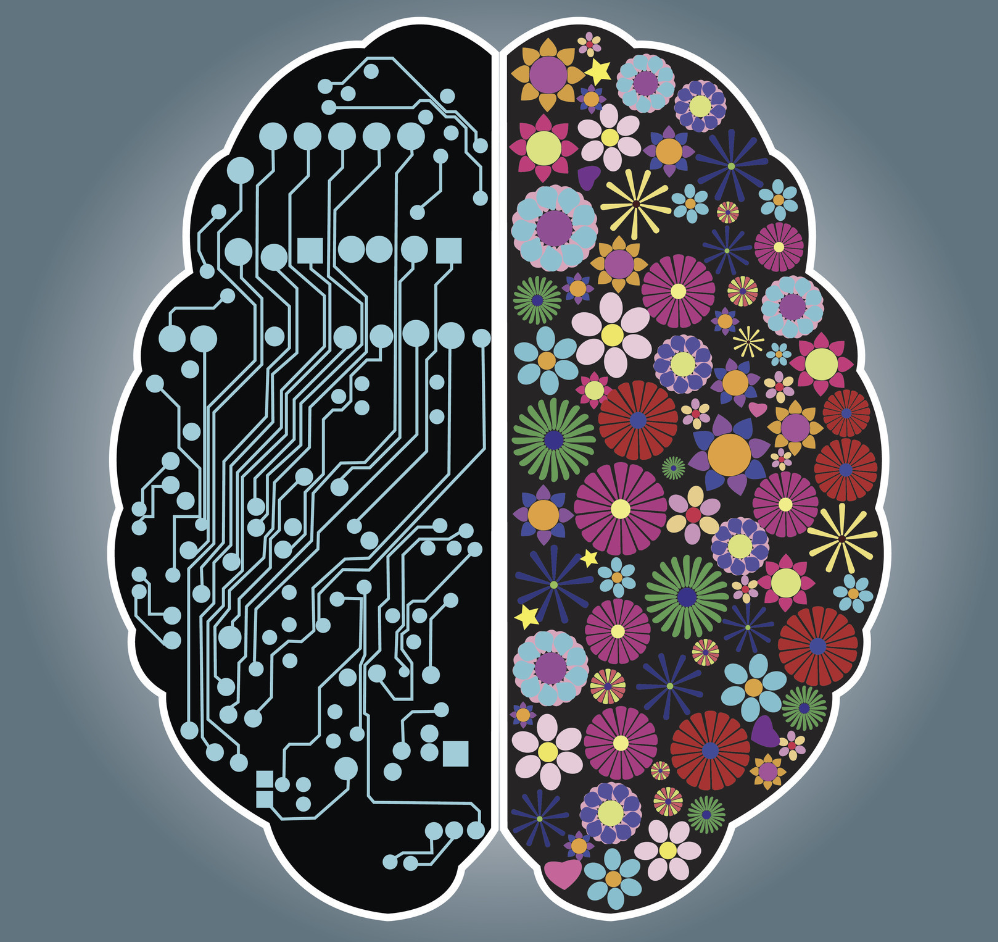
The human brain is a wonder of thrift. It runs on just twenty watts. That is less than a small bulb. AI machines need megawatts of power. Why this gap? The brain grew over crores of years. Nature punished every waste of energy. So neurons fire only when needed. Memory and thinking sit in the same place. Computer chips are different. They push electrons at high speed. They move data to and fro. Most energy is lost as heat.
The brain also has a special design. It has two halves. The left side likes detail and sequence. The right side sees the whole picture. A thick band of fibres, the corpus callosum, joins them. It connects, but it also lets one side check the other. Iain McGilchrist explains this beautifully in his book The Master and His Emissary. AI has no such design. It is one uniform pipeline. There is no second view. There is no inner voice saying, “Wait, look again.” Some link this to AI’s habit of confident mistakes.
Humans also know indecision. Before a big choice, we struggle. We wait. We sleep over it. The scientist Antonio Damasio showed in Descartes’ Error that the body itself joins our decisions. We feel the weight of each option. This struggle does real work. AI does not struggle. It answers hard and easy questions with the same smooth speed. A human adviser’s hesitation tells us the matter is difficult. AI’s fluency tells us nothing. So we must supply our own doubt.
Finally, intuition. Daniel Kahneman, in Thinking, Fast and Slow, called it System 1. It is fast, silent pattern knowledge. Gary Klein studied firemen who sensed danger before they could explain it. Herbert Simon said intuition is simply recognition. A farmer smells rain in the wind the same way. Here is a surprise. AI is almost all System 1. It is pattern-matching, not cold logic. But its patterns come from books, not from life. Reality never tested them. No gut feeling itches inside it.
Be clear about the danger. AI speaks with false authority. It has no doubt, no shame, and no fear of being wrong. It will give a wrong answer in the same confident voice as a right one. It burns huge energy and use significant water resources while the planet warms. It knows no responsibility, for it suffers no consequence. The risk is not that machines will think like us. The risk is that we will stop thinking, and hand our verdicts to a tool that has never lived, never doubted, and never paid the price of a mistake. Keep the judgement with yourself. Trust the machine only as far as you can check it.
Mushtaq Gaadi