

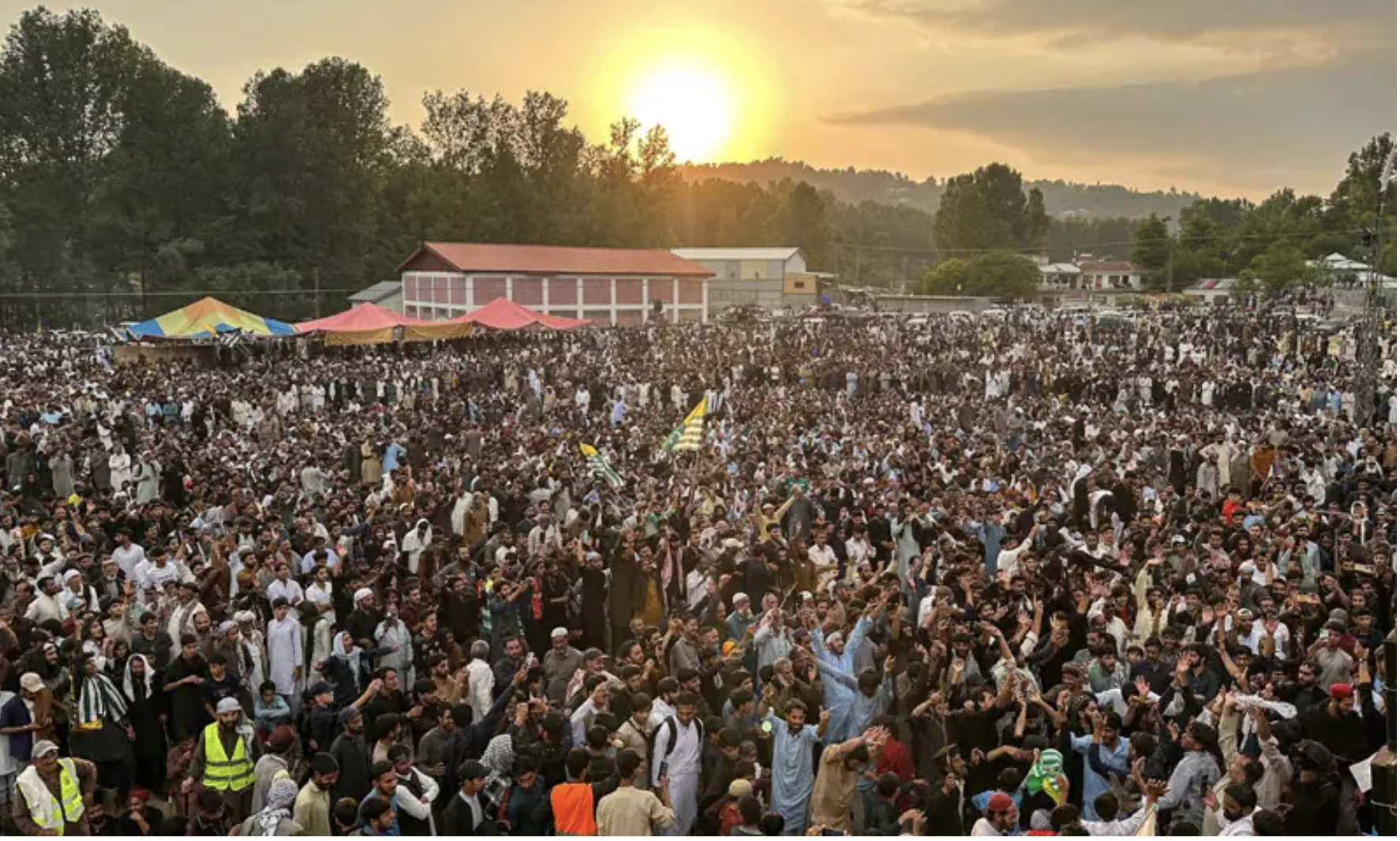
Something is being built in Pakistani Kashmir. The protests since 2023 look like a dispute over electricity and flour and representation. They are more. They are the visible work of a new political community under construction.
This territory was never one country. Mirpur belonged to the Chib chiefs and then to Jammu. Poonch was a principality and then a jagir. Muzaffarabad was the country of the Bomba and Khakha lords. A ceasefire line stitched the fragments together in 1949. The new entity lost its old centres. Poonch city fell across the Line of Control. Old Mirpur drowned under the Mangla lake. A crescent of hills remained, long and thin, held by one state and claimed by another. The logic of the nation-state and the logic of an international conflict now define it. It is administered but not absorbed. It is claimed but not consulted.
Yet the fragments carried an inheritance. The first part of it is the history (and habit/culture) of revolt, and it belongs to Poonch above all, though the territory has now adopted it. In 1837 the Sudhans rose against Sikh and Dogra revenue demands. The rising was crushed with flaying and fire, but the hills learnt that distant governments notice only pressure. In 1947 the ex-soldiers of Poonch rose against the Maharaja’s taxes and made Azad Kashmir with their own hands.
The people learnt that resistance is how the periphery acquires a share in power.
In 1955 the same hills rose against the Ministry of Kashmir Affairs in Rawalpindi. The army suppressed the revolt. Within two years the dismissed leader was president again. Each rising followed the same grammar. Rule from outside, without consent. Each rising ended in concession. The people learnt that resistance is how the periphery acquires a share in power.
The second part of the inheritance runs underground. It is culture and language. The people of all three divisions speak Pahari. Their kinship runs west into Pothohar. Their songs, saints and marriages form one world. The census has never offered their language a box. They are counted as Punjabi, as others, as anything but themselves. What cannot be counted cannot make claims. But what cannot be counted also cannot be divided. The uncounted language is the quiet foundation on which the new community stands.
The movement has now said all this in the language of law. In 2026 it turned from prices to representation. It demanded the abolition of the twelve assembly seats reserved for refugees of the old state living in Pakistan. The demand is simple and radical. Representation should belong to those who live here. With one demand the movement attacked the constitutional fiction that this territory is only a fragment of a suspended state, and named the real political community: the residents of these hills. The state understood the stakes. It banned the committee as a terrorist organisation. Prices can be negotiated. Peoplehood cannot.
States make peoples more often than peoples make states.
The confrontation is now open, and its end is unknown. But the direction is visible. Mirpur’s traders, Poonch’s agitators and Muzaffarabad’s clerks have stood in one front, perhaps for the first time in the territory’s history. States make peoples more often than peoples make states. A crescent that was never a country is learning to act like one. The identity is new. The foundations are old. The construction continues, now under fire