

I. The Night the Radio Spoke
It was a cold December night in 1991. We were sitting around the radio, as we did every evening. The BBC Urdu service was our window to the world. The signal crackled. Then the announcer’s voice came through, measured and grave. The Soviet Union had ceased to exist. Boris Yeltsin had declared the communist experiment dead. Russia would now open its doors to the market and to capital.
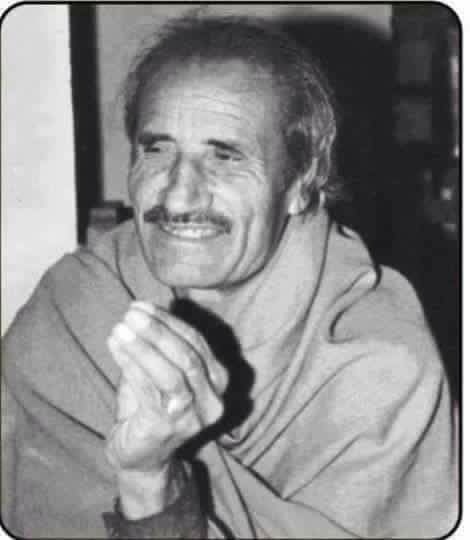
Nobody in the room spoke. My father sat very still. He was the oldest known communist in our town. Marxism was not merely his politics. It was the ideology of our family. He had tried, all his life, to live by its principles. In the family. In the village. In the bazaar. In his school teaching. In almost every corner of his life.
That night he could not sleep. I heard him moving in the courtyard, long after the lights were off.
The next morning he was calm. He went into a room alone. He picked up a pen and paper. He began to write. Later he called me and showed me what he had written. It was an article. Its title was “Future of Socialism.”
The article was a fine weave of grief and hope. Its central argument was simple. Marxism, at its core, was a struggle against oppression and exploitation. The Soviet Union had ended. But oppression and exploitation had not ended. This grave problem would not wither away with one state. Marxism might change its form. It might speak another language. It might dress itself in another idiom. But the struggle would go on. The next generations would have to fight it, in one way or another.
I understood, much later, what that article really was. It was my father processing the future of his lifelong commitment. In a single night, he had buried one Marxism and recovered another.
II. Dera Ghazi Khan, Early 1940s
My father became a Marxist in his twenties. He was then a bachelor’s student at the Dera Ghazi Khan college, in the early 1940s. It was a time of great upheaval. The Second World War was at its peak. Nazi fascism was winning in Europe. British colonialism was being challenged by the Congress-led nationalist movement. At the same time, communal forces were rising across India. The air itself was ideological.
He was introduced to Marxism by a friend from our own village. This friend, strangely, later took a different road. The sufferings of life compelled him to take shelter in Islamic mysticism.
III. Lahore and After
That was never my father’s case. He remained truthful to Marxism in its purest form. After Partition he went to Lahore for further studies. There he saw the burgeoning communist movement of the new country. He saw its energy, its study circles, its trade unions, its poets. And he saw it crushed. The state banned the party and hunted the left. By the time General Ayub Khan’s regime consolidated itself, the movement had been driven underground. My father returned to the Siraiki Wasaib. But he carried the movement inside him.
IV. Testing Marxism Against the Soil
Two things enriched my father’s loyalty to Marxism. They also saved it from becoming a cage.
First, he studied Marxist theory. He did not simply wear its ideological straitjacket. He read Marx as one reads a serious thinker, not as one recites a catechism.
Second, he tested the theory against the ground realities of our own society in the Siraiki Wasaib. His method was inductive. He did not begin from the generalisation and force the village into it. He began from the village. He studied the peculiarities of our social and cultural life. Then he checked them against the generalisations of Marxism.
He saw, for instance, how loyalty as an emotion belonged to a particular mode of production. The loyalty of the peasant, the tenant, the artisan was not the individuated contract of capitalist society. It was another social form altogether. He studied Marx’s concept of alienation in a way no textbook would dare. He studied it in the love of a peasant for his cow. The peasant knew the animal. He fed it before he fed himself. The cow was not a commodity to him. Then the market came. Market relations turned the animal into a price. They took away that love and attachment. They introduced a crippling self-alienation into the peasant’s world. My father saw Marx’s abstraction walking in our own fields.
V. Marxism and the Siraiki Question
His finest application of Marxism was in the field of Siraiki nationalism. He belonged to the generation that first realised it was different. Different from Punjab. Different from the Punjabi language and its cultural claims. This realisation was not born of resentment. It was born of observation.
He saw that the left of his time was alienated from the people it claimed to serve. It spoke in borrowed idioms. It did not know the local language, the local metaphors, the local wounds. He worked to change this. He contributed significantly to turning the leftist circles of the Siraiki Wasaib into enlightened Siraiki nationalists. Class and culture, he argued, were not rivals. They were two names of the same soil. One outcome of this long labour was the establishment of Siraiki Lok Saanjh.
VI. The Question as Pedagogy
There was another dimension to his Marxism. He recognised the importance of inter-subjectivities.
He was a Marxist. But he did not forbid himself other books. He read Freud. He read Erich Fromm. He read Paulo Freire. He read them all in the context of the Hegelian dialectic. The base did not abolish the psyche for him. The class struggle did not cancel the inner life.
He was fond of unearthing the subjectivity of his friends and comrades. His instrument was the question. He would ask hundreds of questions. He never issued a sermon. His deep probing, his inter-connected questions, formed a dialogue that was itself a pedagogy. The question carried the answer inside it. The listener had only to open it.
His method was never to shake another man’s convictions by force. That would only harden them. Instead he would seed a doubt in the deepest recesses of the mind. A small doubt, carefully placed. The other person was then compelled to work it out himself. Sometimes it took years. But the conclusion, when it came, belonged to that person. It was not borrowed. It was earned.
He was a Marxist who always gave due respect to inter-subjectivities. He knew that no revolution passes through society without first passing through persons.
VII. The Parable of Digestion
He wrote these ideas down in his essays on Siraiki culture, language and politics. He wrote it in Siraiki itself, not in the borrowed languages of theory. The argument moved like a parable.
Everything is matter, he wrote. The stone of the mountains. The sand of the deserts. The water of rivers and seas. Trees, animals, man. All things are knotted to one another in circles of relation.
Then came the food. Food is a thing outside us, he wrote. It enters the stomach. It passes through a hidden process. It becomes bone, nerve, and flesh. Its old form is gone. Its new form does another work.
The mind, he said, digests the world in the same way. No sensation stays pure. For the newborn, a sound is only a sound. With time it becomes the mother’s voice. A stranger’s voice. A voice of love or of anger. The past enters every new hearing and gives it meaning. That is why no two people feel the same verse the same way.
And then his finest stroke. You cannot look at the body’s tissue and tell whether the meal was potatoes, chickpeas, or rice. In the same way, you cannot look at a thought and read off the event that made it. The world makes the mind. But it makes it through a stomach. The relation is real. It is material. And it is never direct.
He had refused mechanical Marxism in a village idiom. Matter first, always. But matter digested, transformed, become person.
VIII. A Marxist Anthropologist
Years later, I got admission in the anthropology department at Quaid-i-Azam University. I immersed myself in social and cultural anthropology. And there, in the seminar rooms of Islamabad, I finally recognised my father. He was, wittingly and unwittingly, a Marxist anthropologist.
His emphasis on language, on culture, on the social field. His refusal of the ready-made formula. His patient fieldwork in his own village. These were the markers of his distance from the traditional, ideologically ridden left. He practised Marxism in its most practical form. He did not apply Marxism to our society. He discovered it there.
IX. Thirty-Five Years Later
Today, I imagine he was right in his futuristic imagination.
The unipolar world has collapsed. The so-called triumphant neoliberalism has been defeated in its own citadel. In the USA, the Trump regime has replaced free trade with tariff weapons and trade war. The Hormuz crisis has shown that the global order is fragmenting into regional polities. The dependent development models imposed by Northern capitalism have produced their own underdevelopment in the Southern peripheries. Nature is being ruthlessly exploited in the hunt for critical minerals. Environmental breakdown is at the doorstep. The climate crisis is fast emerging, and it will bring its own great disruptions. Technologies like AI are bringing theirs.
Oppression and exploitation did not wither away. They changed form. They changed language. They dressed themselves in new idioms. Exactly as my father wrote, on that calm morning after the sleepless night.
X. The Strait Gate
Looking back after thirty-five years, my father’s hope appears to me like the hope of Walter Benjamin in his theses on the philosophy of history. Benjamin refused both the complacency of progress and the paralysis of despair. He kept a small door open in every moment of time.
“For every second of time was the strait gate through which the Messiah might enter.”
My father kept that gate open on the worst night of his political life. He picked up a pen the next morning. That, perhaps, is all that Marxism ever asked of him.
One response to “My Father’s Marxism- Mushtaq Gaadi”
Late but better than never