

Marx gave the process its name. Primitive accumulation. The separation of people from their means of living. The commons fenced, the peasant expelled, the land turned into property. He wrote that it came dripping with blood and fire. But he placed it in capital’s childhood. A stage that passes.
Silvia Federici corrected him. In Caliban and the Witch she showed that it never passes. Capitalism must keep enclosing to keep accumulating. And its targets are always the same. The commons. Women’s work. Nature. Everything that sustains life without producing rent. This unpaid world must first be declared worthless. Then it can be taken. The witch hunt and the enclosure were one campaign. The war on the commons is also a war on the people who live by them, and it does not end. In Siraiki Wasaib it has not ended. It became an administration.
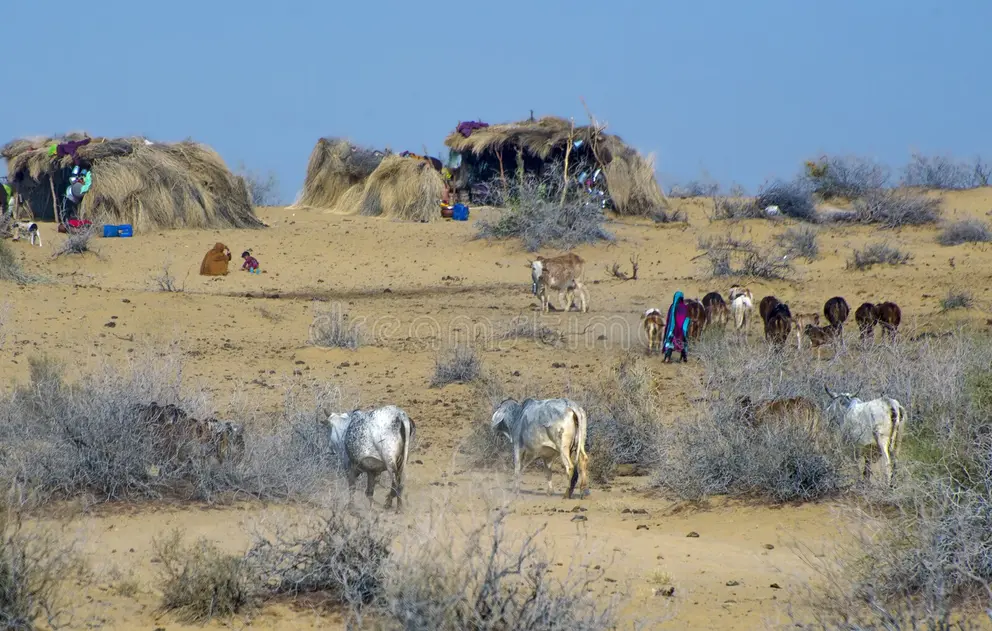
The administration sits in Lahore. This is what internal colonialism means. Not one country ruling another. A centre ruling its own periphery by the colonial method. The decisions come from Lahore. The land comes from the Wasaib. The record began in the 1880s, when settlement officers wrote one word over the grazing grounds of the Bar and the Thal and the Rohi: waste. Six million acres of such waste went under canal command. The graziers became jangli, people of the jungle, obstacles to improvement. In the 1920s the Sutlej Valley Project carried the canals into Bahawalpur. Two and a half million acres of the state came under command. Nearly one million acres were allotted by 1947. The state’s own register shows who received them. By 1932 the local share was 3.36 per cent. A statute of 1912 let the state allot land to any person on such conditions as it thinks fit. The Thal Development Authority Act of 1949 repeated the phrase word for word. Pakistan was new. The sentence was old. It capped village commons and made the grazier a trespasser on his own rakh. The Authority’s writ ran over 1.6 million acres of the Thal. In twenty years it settled more than thirty one thousand refugee families. Its peasant grants and open auctions brought Punjabi settlers from upper Punjab beside them, and the auctions asked no questions of residence at all. Cultivation rose from fifty seven thousand acres to 1.3 million. The rakhs of the graziers became the chaks of the schemes. In 2023 the files show Cholistan land scheduled for the landless re-lettered from Category B and C to Category A, so the army could receive it. The same year 700,000 acres went to a corporate venture in one undisclosed lease. When the landless finally won their own ballot, more than 99 per cent drew land the record itself grades as fully barren. In 2026, three quarters of the newest scheme’s acreage came from grazing commons. Almost all of it in the Wasaib. Same centre. Same periphery. Same word.
The instrument of all of it is the record. Richard Saumarez Smith studied the Punjab settlements and called the system rule by records. The register did not describe rights. It created them. Whatever the record named became property. Whatever it did not name ceased to exist in law. Neeladri Bhattacharya shows the conquest happening first inside the categories, and he shows it in our own Dera Ghazi Khan. There, rights grew from work. The lathbund raised the lath, the earthen mound that caught the hill torrent for the fields. The butimar cleared the scrub. The adhlapi dug half a well and earned half its land. The settlement officers could not fit these people into landlord and tenant. Fryer, settling Dera Ghazi Khan in 1871, confessed it. Record the lathbund one way and he received more than his right. Record him the other way and he received less. The Tenancy Act of 1887 resolved the confusion by erasure. Lathbund, butimar, adhlapi, all became occupancy tenants of the third class. One entry swallowed their histories. The entry came before the canal. It still does. In 2026 the state published nine thousand and thirty six names on colony land, and gave the desert’s ten thousand lots one line. The grazier has no entry at all.
Now add the climate, because the ledger cannot. The commons that survived this history are the region’s climate infrastructure. Rangeland soil holds carbon quietly over centuries. The plough releases it. The herd that moves with the rain is the oldest drought adaptation humans possess. The toba, the shared pond, stores water and costs the treasury nothing. Common land pools risk. No family fails alone. In a warming Indus basin this is what resilience looks like. It grazes. It moves. It shares. Khwaja Farid made this entry long ago.
دل ہر ویلھے پئی تانگھے
وَنڄ ݙیکھاں مال دے لانگھے
ڳائیں ٻکریاں بھیݙاں چانگے
لنگھ پُوندم قدم اَڳیرے
The heart longs every hour to go and watch the herds pass. Cows, goats, sheep and camel calves. And the steps move on with them. His Diwan is the counter register. It records the commons as love. But none of this earns rent. So the ledger reads the commons as zero, and accumulation converts zero into property. The state ploughs carbon into the sky and plants water-hungry corporate farms in a desert whose groundwater is already turning saline. The farms are failing on that salt. The leases stand anyway.
And Lahore has now found a second blade. International climate finance is growing into billions of dollars. Carbon can be counted, certified and sold. Pakistan adopted its carbon market policy in 2024. Punjab runs a green credit programme. And the Green Pakistan Initiative, the corporate venture that holds Cholistan, writes carbon credits into its own mission statement. Its project map lists the Cholistan blocks beside Rakh Ghulaman and Rakh Mahni in the Thal. The rakh and the toba appear on the corporate brochure by name. So the same commons are to be made profitable twice. Once as land, taken through dispossession. Once as carbon, sold to the world’s conscience. The farm that replaced the pasture will claim the credit. The grazier is priced out of both. His herd will be called degradation. His removal will be called climate smart. One sword, two edges, and both cut the Wasaib.
So the demand is simple. Count the commons as living systems and count their keepers first. Enter the grazier in the record before the carbon buyer enters it. The Rohi and the Thal are not empty land waiting for capital. They are the Wasaib’s shield against the century that is coming. The first entry is the hardest. It admits the land was never empty.