

Half a century ago, Hamza Alavi set out to explain why the generals and the officers rule Pakistan. He was our most serious thinker on this question, and his 1972 essay is still where every debate on the Pakistani state begins. His argument was simple and powerful. The British built a state not to serve the society under it but to hold it down. Every class in India was its subject. None was its master. The master sat in London. In 1947 that machine passed to Pakistan, and the master’s chair fell vacant. So the state stood above every class in the new country. He called it the overdeveloped state. The landlords, the traders and the foreign companies were each too weak to capture it. So the generals and the senior officers stood above all of them, like an umpire above the players. The umpire favours no team. He only keeps the match going. This umpire, said Alavi, keeps the property system going. It was an elegant theory.
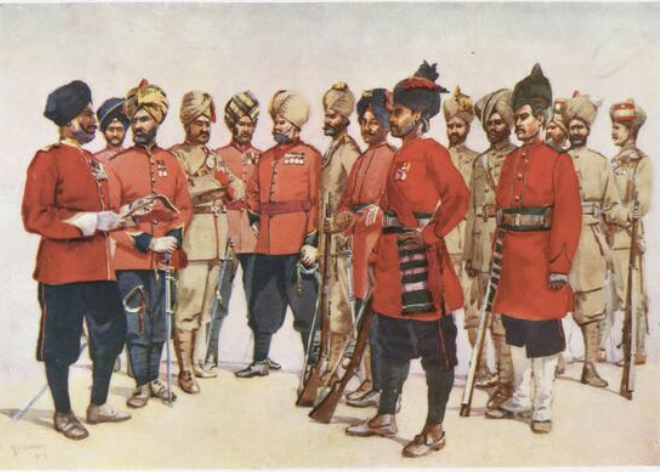
But the umpire had a home district. The colonial army was recruited from a few districts of upper Punjab, Rawalpindi, Jhelum, Chakwal, Attock, and some Pakhtun tracts. The British called these people the martial races. The recruitment map of 1900 is, with small changes, the recruitment map of today. The officer corps speaks one region’s idiom and largely marries within it. The senior bureaucracy is not very different. Class analysis alone cannot see this. In Pakistan class comes dressed in ethnicity, and the state itself has an ethnicity. In his later years Alavi himself turned to ethnicity, but even then he saw it as a quarrel over government jobs, not as the making of the state itself. Still, an umpire from one team’s mohalla may yet be honest. The record must decide. Let us look at what the umpire did with the ground.
Start where the canals started. In the 1880s the British cut canals into the bars of Punjab and the Wasaib. They gave the new land to chosen castes and loyal families brought from central Punjab. The old graziers of the bar lost their commons. This was called development. In 1947 the machinery passed to Pakistan and did not pause for a day. The evacuee lands left behind by Hindus and Sikhs went, in large part, to the well connected. In the 1950s and 1960s new barrages rose on the Indus at Kotri and Guddu. The fresh land under them should have gone to the landless haris of Sindh. Much of it went to civil and military officers and to Punjabi allottees brought from upcountry. The haris agitated. Hyder Bux Jatoi wrote and marched. The files won. From Ayub’s time onward, every senior officer began to retire with agricultural land, and most senior officers were sons of the recruitment map. Border lands first, then Cholistan lands, then urban plots. The practice continues today. In the 2000s the frontier moved into the cities. Housing schemes in the name of defence spread over village commons. In Malir, Sindhi goths older than the country went under a private gated city. And now, in the winter of 2025, the machines stand in Cholistan. New canals for the desert. Corporate farms on land the files call wasteland. Nobody asked the people of the Rohi. Nobody asked Sindh downstream, which knows that every new canal upstream is water taken from its fields. Sindh rose. The plan was paused. It was not buried.
Canal colonies, evacuee property, barrage lands, border grants, retirement plots, gated cities, corporate farms. One hundred and forty years. Different rulers, different flags, one continuous work. Each time land was disputed, the state stood as umpire. Each time the match ended, the umpire went home with the ground, and home was upper Punjab. An umpire who takes the ground home after every match is not an umpire. He is a player. He is the strongest player, because he also writes the rules.
Alavi’s theory can also be tested on its own terms. His umpire referees the propertied classes. The Bengali traders and professionals were propertied men, and the Awami League was their party. They won the match outright in 1970 and asked for their share. The umpire answered with an army action, and the majority of the country walked out in 1971. The Baloch sardars were propertied men by any definition. They received military operations, decade after decade. Even when the players held property, the umpire refused to referee if they came from the wrong side of the recruitment map. When Sindh rose in 1983 under the MRD, soldiers and gunships moved through its villages. There is a control test. In Okara, Punjabi tenants of the military farms refused their share-rent and claimed the land. The same army faced them. There were sieges, cut water, prison cases, some deaths. There were no gunships. Twenty years on, the tenants still hold the land. The soldier would not burn villages his own recruits come from. The demand was the same, land. The answer differed by district. Where its home districts sit, the state bargains. Where the periphery resists, it fires. A mediator who mediates only in his own mohalla is not mediating. He is ruling.
And yet the ruled did not dissolve. This is the second thing the theory missed. Alavi measured the state and found it overdeveloped. He never measured the society, so he never found it deep. The Rohi still sings Farid, who walked that desert and filled his kafis with its dunes, its rains, its herders and their loves. In the patwari’s register the Rohi is empty land, waiting for allotment. In the kafi it is the most sung desert in our poetry. Sindh still gathers at Bhit Shah. The languages the state kept out of its schools are still spoken in crores of homes. This state can seize land. It has not yet seized meaning. A state strong in seizure and weak in service is not an overdeveloped state. It is an overarmed one.
The word settler is no import from theory. The colonial state wrote it into its own registers, dividing the canal colony tenants into abadkar, the settler, and maqami, the local. In the Wasaib the word never left our tongues: we say abadkar to this day. Sindhi politics from G. M. Syed onward has said Punjabi settler for seventy years, while the theory books looked the other way. It is time to return the word to respectability. What runs from the canal colonies to the Cholistan farms is not an event. It is a structure. It settles one people, again and again, on the lands and waters of others, and it calls this development.
The old empires knew this road. The late Mughals went on issuing jagirs on paper for lands they no longer held. The paper grew grander as the ground shrank. Sovereignty became a document. Our overdeveloped state is walking that road now. It grants deserts it has never asked, dams rivers it does not own, and quarrels with its own federating units to keep the register straight. Alavi saw a machine standing above society. Look again. It is a machine sinking into society, and the sand of the Rohi is patient.